
Nardò is a municipality in the province of Lecce, located in the north-west, almost facing the Ionian coast. Its historical centre is a treasure trove of beauty, rich in churches, architecture and Baroque art. It is the ideal place to stay during a holiday in Salento, not only because it allows you to explore its beauty, but also because of its proximity to the sea. A perfect compromise to be able to enjoy tranquillity without being too far from the coast, which in summer, for example, can be chaotic. But in reality, Nardò, thanks to its beauty, is a perfect destination at any time of year!
The History of Nardò
The origins of Nardò, like those of the entire province, date back to prehistoric times, with evidence of human settlements as far back as the Palaeolithic era. It was in Nardò, precisely in the caves of the Bay of Uluzzo, that engravings and other very important archaeological elements were found, considered the first manifestations of figurative arts in Europe.
The town of Nardò, on the other hand, is said to have originated around the 7th century B.C. with the settlement of the Messapi. In 269 B.C. it was conquered by the Romans, together with its port, and became municipium after the Social War. Following the fall of the Western Roman Empire (476) and after the battles between the Byzantines and the Goths (544), Nardò was ruled by the Byzantine Empire (552-554) and, for a short period (662-690), by the Longobard Kingdom.
Thanks to Byzantine rule, the presence of Basilian monks increased, who spread the Eastern rite and cult, and to whom we owe the spread of caves and crypts.
Between 901 and 924, Nardò was attacked by the Saracens coming from Sicily and in 1055 it was conquered by the Normans. Later, in the second half of the 13th century came the Angevins, who brought about the birth of feudalism. From 1480 to 1484 there were several Turkish and Venetian dominations, and in 1497 the feud of Nardò was assigned to Andrea Matteo Acquaviva.
From 1497 to 1806, Nardò had a flourishing cultural period, becoming the seat of universities, academies and literary and philosophical studies.
After the abolition of feudalism, the town was no longer dominated by the Acquaviva family, who continued, however, to have many properties. In 1810, Carboneria also spread in Nardò with the sect of the Fenice Neretina. In the early post-war years, between 1943 and 1947, Nardò welcomed, in the nearby Santa Maria al Bagno, over a hundred thousand Jews who had escaped the Nazi extermination camps. In fact, for this, in 2005 Nardò received the Gold Medal of Civil Merit from the President of theRepublic Carlo Azeglio Ciampi.
What to see in Nardò
Are you planning a visit to Nardò? Here is what to see!
Piazza Salandra
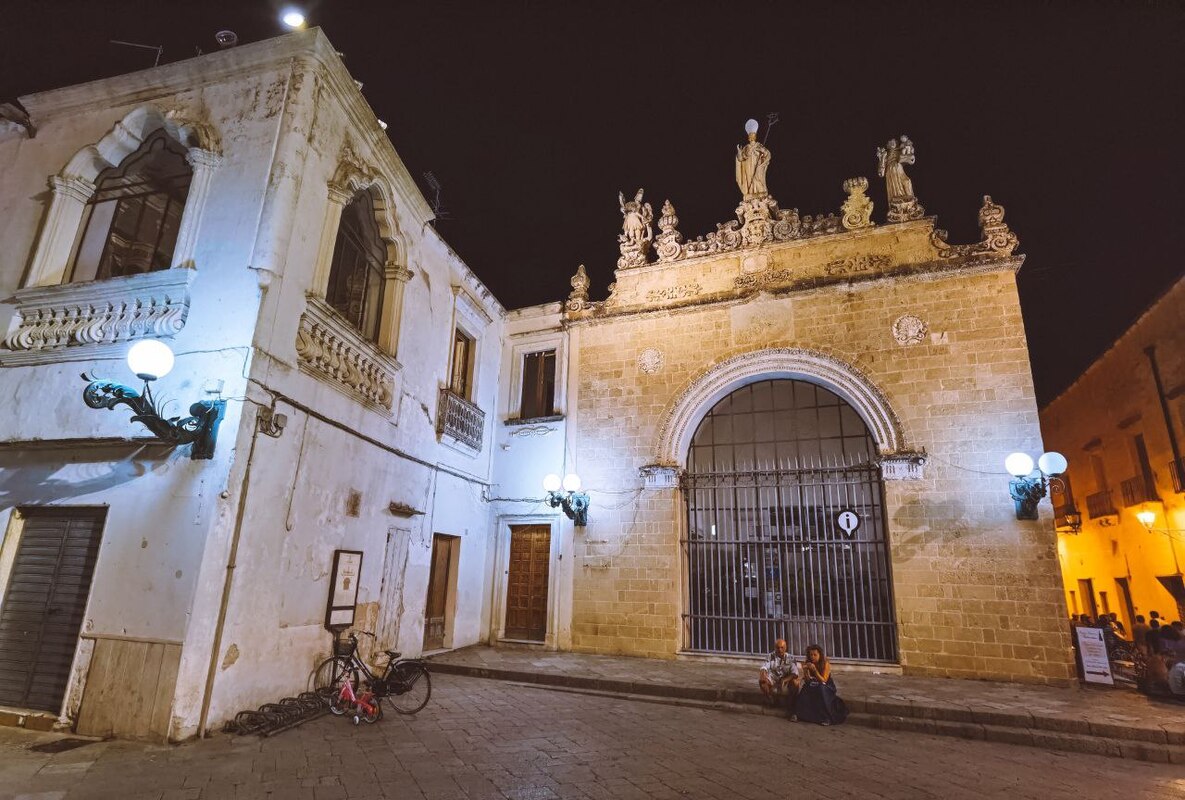
Piazza Salandra is the beating heart of Nardò, a splendid place surrounded by Baroque architecture and ancient buildings. In the centre houses the column with the Immaculate Conception spire and is surrounded by buildings housing city associations and clubs, bars and craft shops. The square is also home to the Chiesa del Trifone, built between 1720 and 1723, and the Sedile, a Renaissance building with Rococo contaminations.

Cathedral Maria SS.ma Assunta
Among the things to see in Nardò, you cannot miss the Cathedral Maria SS.ma Assunta, originally founded as an abbey in the 11th century, but over the centuries it underwent several transformations. It has a basilica layout with three naves, divided by two orders of round and pointed arches. Of particular interest are the numerous frescoes on the walls, dating back to the 14th and 15th centuries, together with the wooden Crucifix from the 13th century.

Church of San Domenico
Among the most important religious buildings in Nardò is the Church of San Domenico, built between 1580 and 1594. Its façade is made of carparo stone and is richly decorated with gnomes, cherubs, putti, garlands and caryatids in the first part; while the upper part appears more sober with a large central window. Among the various altars, the Church of San Domenico houses that of the Madonna of the Rosary with the fifteen mysteries, by the artist Antonio D’Orlando.
Minor Churches
The historical centre of Nardò is rich in religious buildings. Strolling through its streets, you will see the Church of the Immaculate Conception, the Church of Santa Chiara, the Church of the Beata Vergine Maria del Carmelo, the Church of Santa Maria della Purità, the Church of Sant’Antonio da Padova, the Church of San Giovanni Battista, the Church of Santa Teresa and the Church of San Francesco da Paola.

The Castle of Nardò
The castle of Nardò is a work of the architect Giulio Antonio Acquaviva and the first news about it dates back to the second half of the 15th century, when its construction marked the passage from Angevin to Aragonese domination.
Its structure is quadrangular in shape, with four cylindrical towers at the corners and a façade decorated with ashlar motifs. Today, the castle houses administrative offices and the Museum of Rural Civilisation and Popular Traditions, which houses work tools, photographs and furniture.

The Osanna of Nardò
The Tempietto dell’Osanna in Nardò was built in Lecce stone in Baroque style in the 16th century. In ancient times, it was used for religious services.
The Museums of Nardò:
Nardò boasts a large number of museums, here are the ones you can visit:
- Museum of Memory and Hospitality
- Museum of the Sea
- Children’s Archaeological Museum
- Diocesan Museum
- Nardò Museum of Prehistory
- Museum of Rural Civilisation and Popular Traditions
Where to eat in Nardò
If you want to try traditional Salento dishes, we recommend some of the best restaurants and trattorias in Nardò that are truly delicious:
- Hostaria Corte Santa Lucia
- Il Mignano Restaurant
- Antica Trattoria Salandra
Nardò: Beaches and sea
Nardò’s proximity to the Ionian coast allows you to reach many of Salento’s most beautiful beaches. From sandy beaches to wilder and unspoilt locations, here are the beaches near Nardò:
- Porto Selvaggio: located in the Regional Park of Porto Selvaggio and Palude del Capitano, it is a small inlet immersed in greenery and surrounded by low cliffs; here the beach is characterised by pebbles, there are no beach clubs and the waters are cool due to the presence of springs;
- Santa Caterina: this area is wild with low cliffs, a few beach clubs and a tiny beach that gets crowded easily;
- Sant’Isidoro: this is a small bay of fine sand with a few beach resorts, ideal for couples and families;
- Baia di Torre Uluzzu: it takes its name from the ruined tower overlooking the blue and has a wild, rugged cliff from which breathtaking views can be admired;
- Porto Cesareo: chaotic and lively, this is a coastline characterised by fine, light-coloured sand and kissed by clear, shallow waters; here, stretches of free beach alternate with beach resorts;
- Torre Lapillo: if you are looking for the Caribbean sea, this is one of the areas that best represents it, white sand and blue waters with shallow waters;
- Punta Prosciutto: very similar to the area of Porto Cesareo and Torre Lapillo, it is particularly popular for its crystal-clear waters and long beaches of fine, light-coloured sand with tall, green dunes;
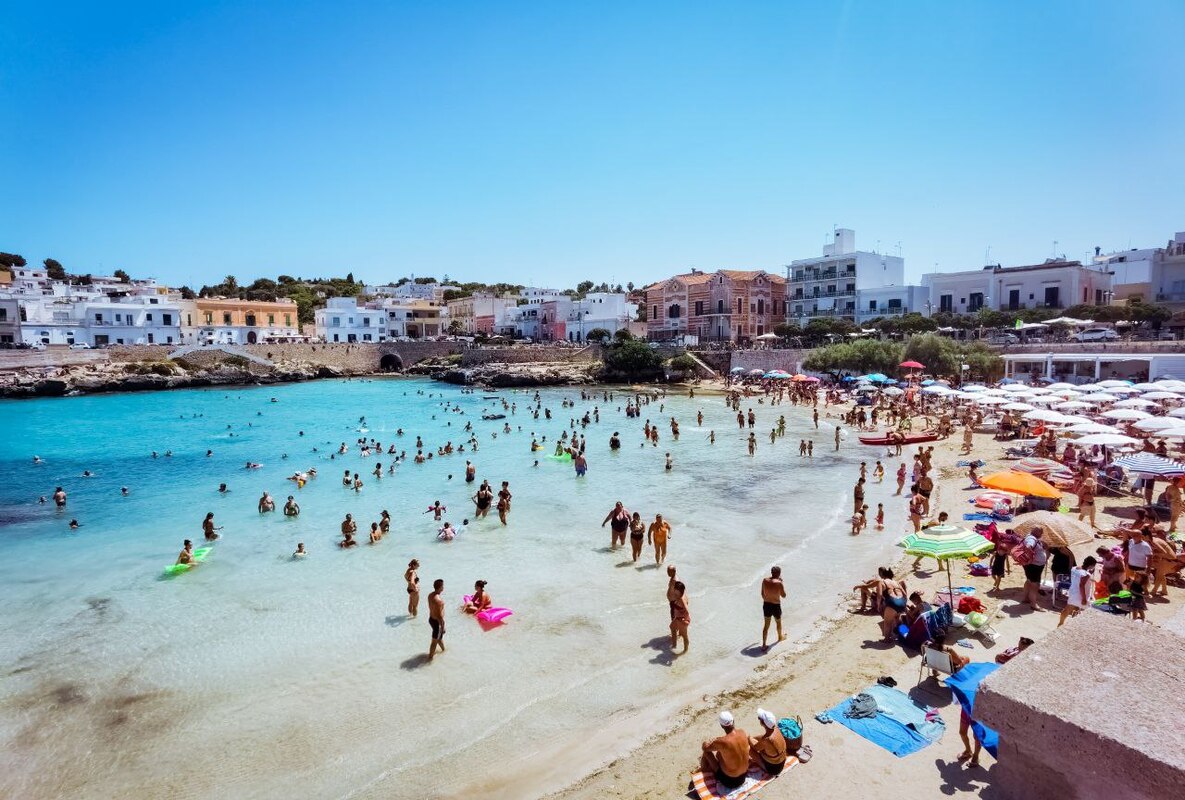
- Santa Maria al Bagno: a wonderful sandy inlet with shallow, crystal-clear waters, surrounded by low cliffs;
- Gallipoli: the coast of Gallipoli is vast and has several beaches suitable for different generations. For example, the baia verde (green bay) area is frequented by young people, the Purità is the small beach in the centre of town and is frequented mainly by locals, the Padula Bianca, on the other hand, is perfect for families with children.
In the surroundings:
Nardò is located in an excellent position, not only a few steps from the sea, but also close to many towns, villages and points of interest in Salento. Here is what to see near Nardò:
- Lecce 26 km away
- Gallipoli 17 km away
- Parabita 20.3 km away
- Matino 29 km away
- Galatina 16 km away
- Copertino 11 km away
- Leverano 13 km away
- Maglie 37.7 km away
- Martano 15 km away
- Ruffano 21 km away
https://www.hdsalento.com/wp-content/uploads/2022/02/spiaggia-di-santa-maria-al-bagno.jpg


